Tracing Taiwan’s Industrial History From US Aid to the Smiling Curve at the Kaohsiung Science Museum
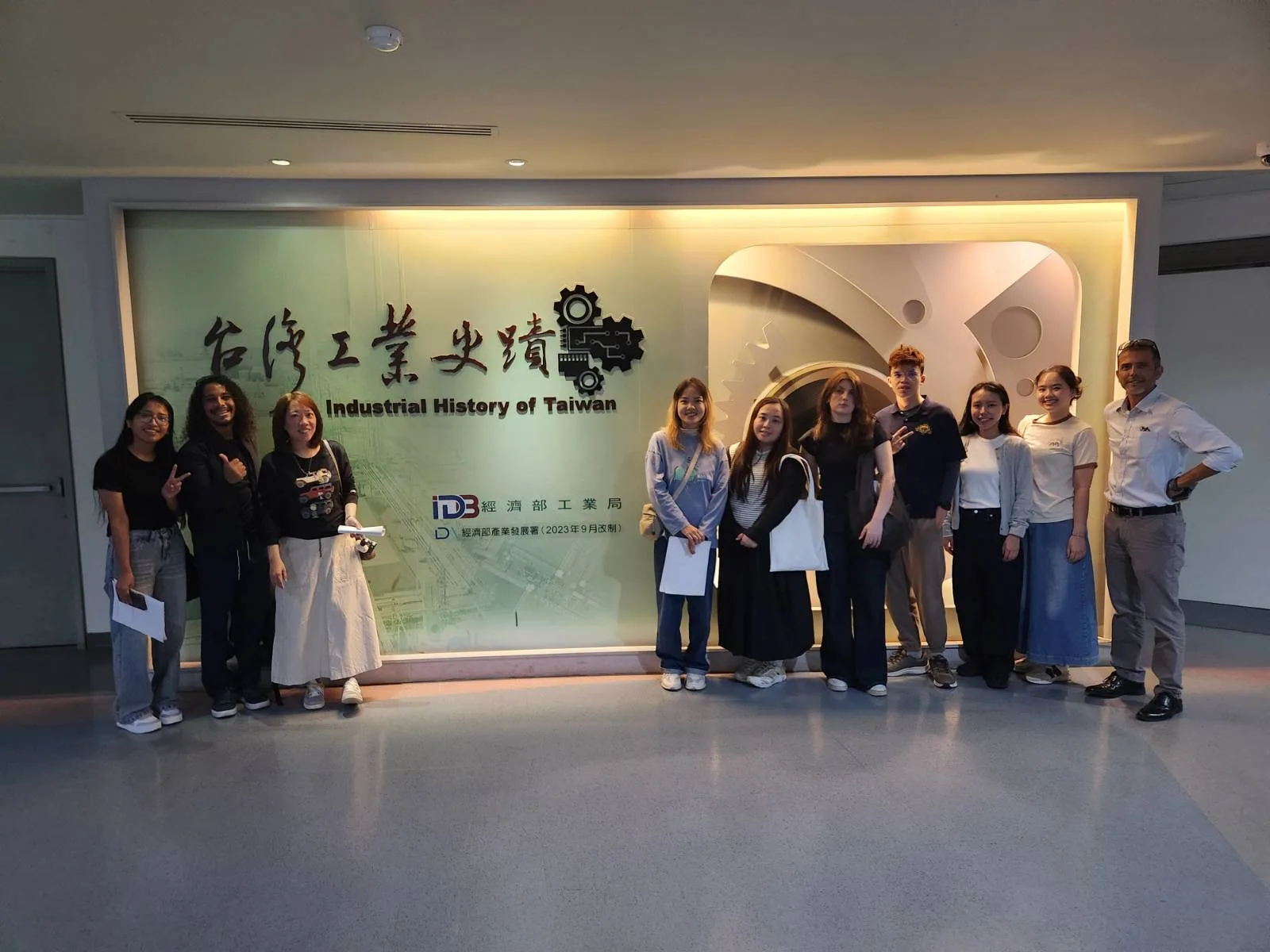
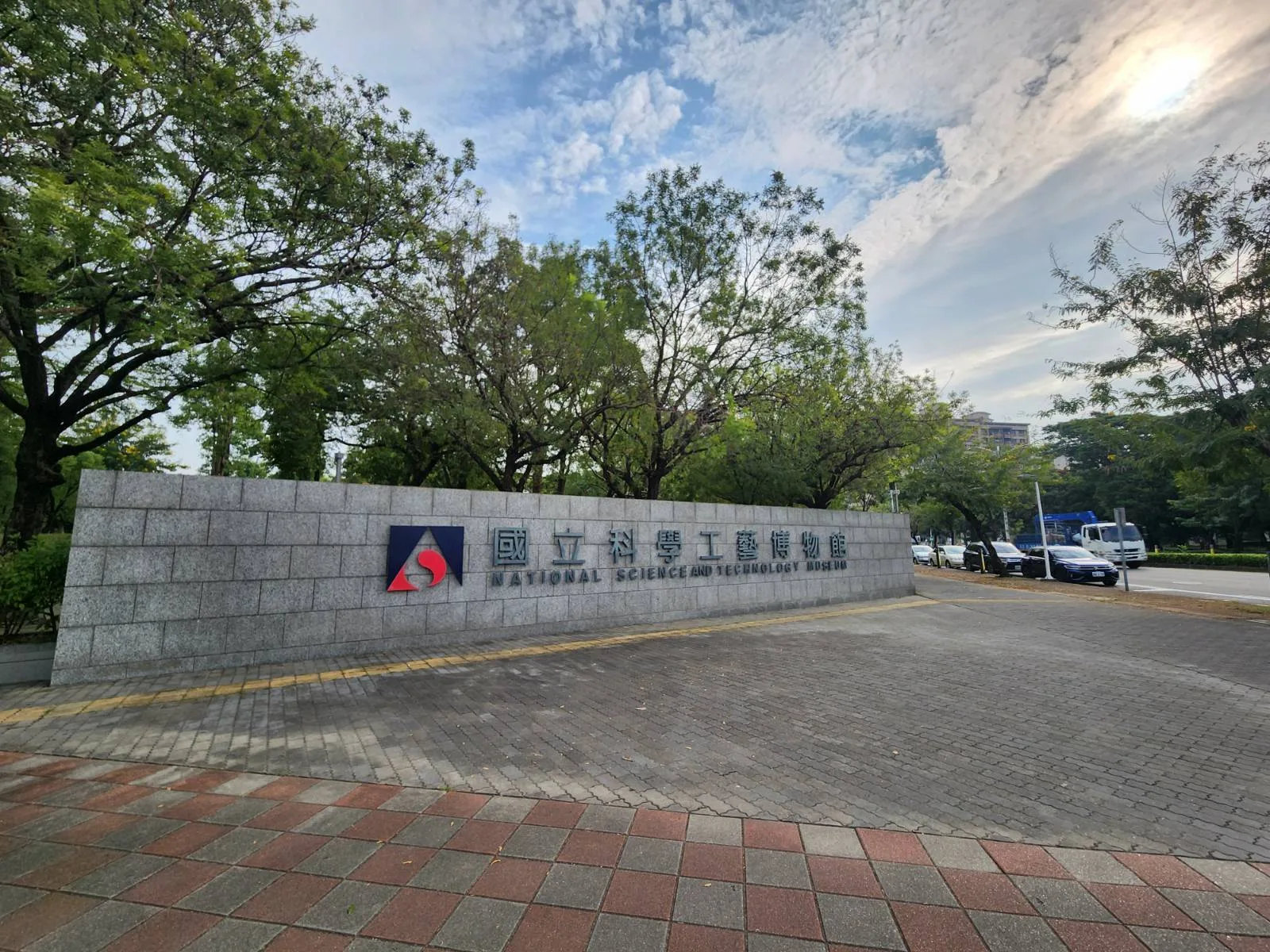
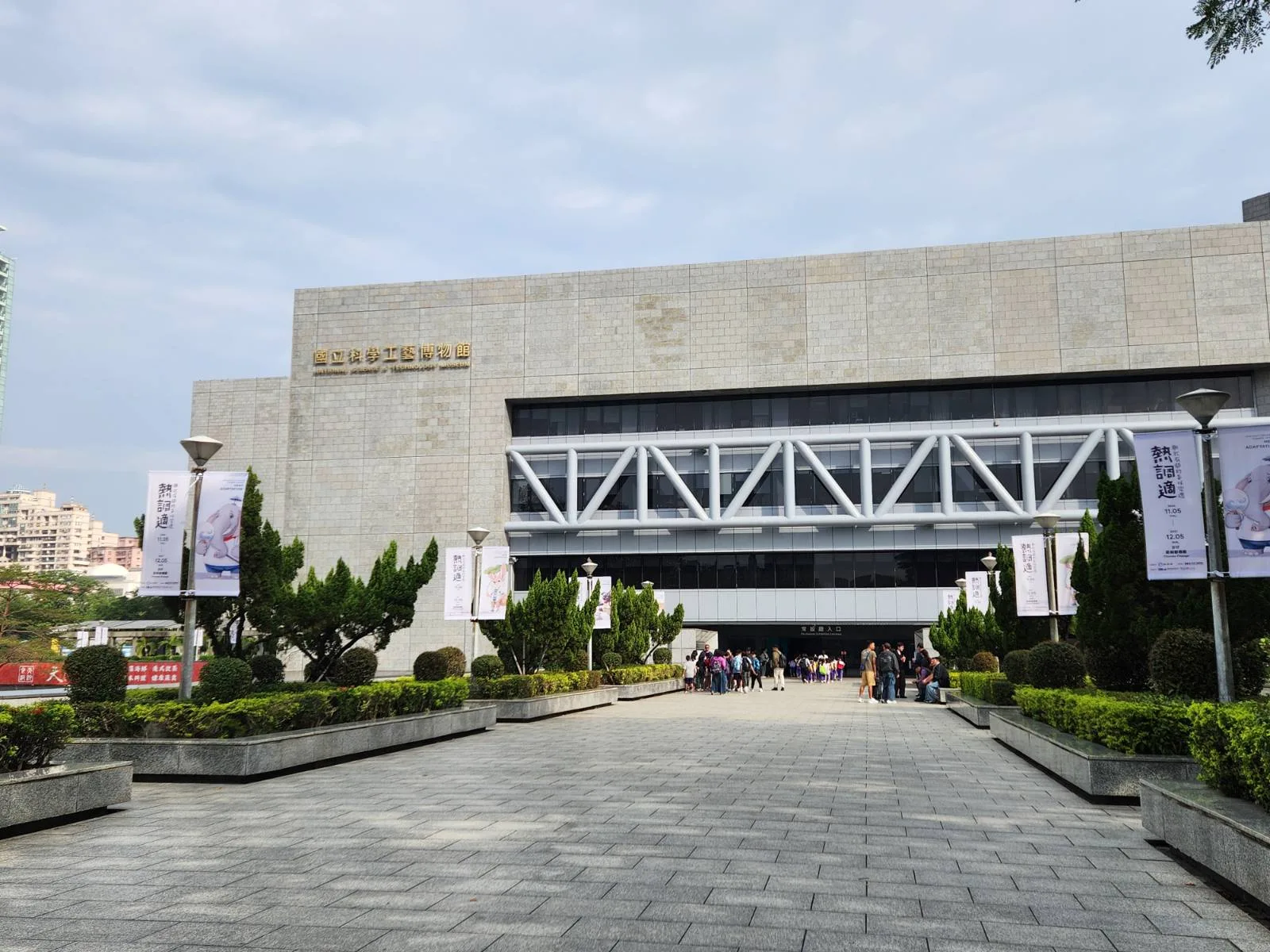
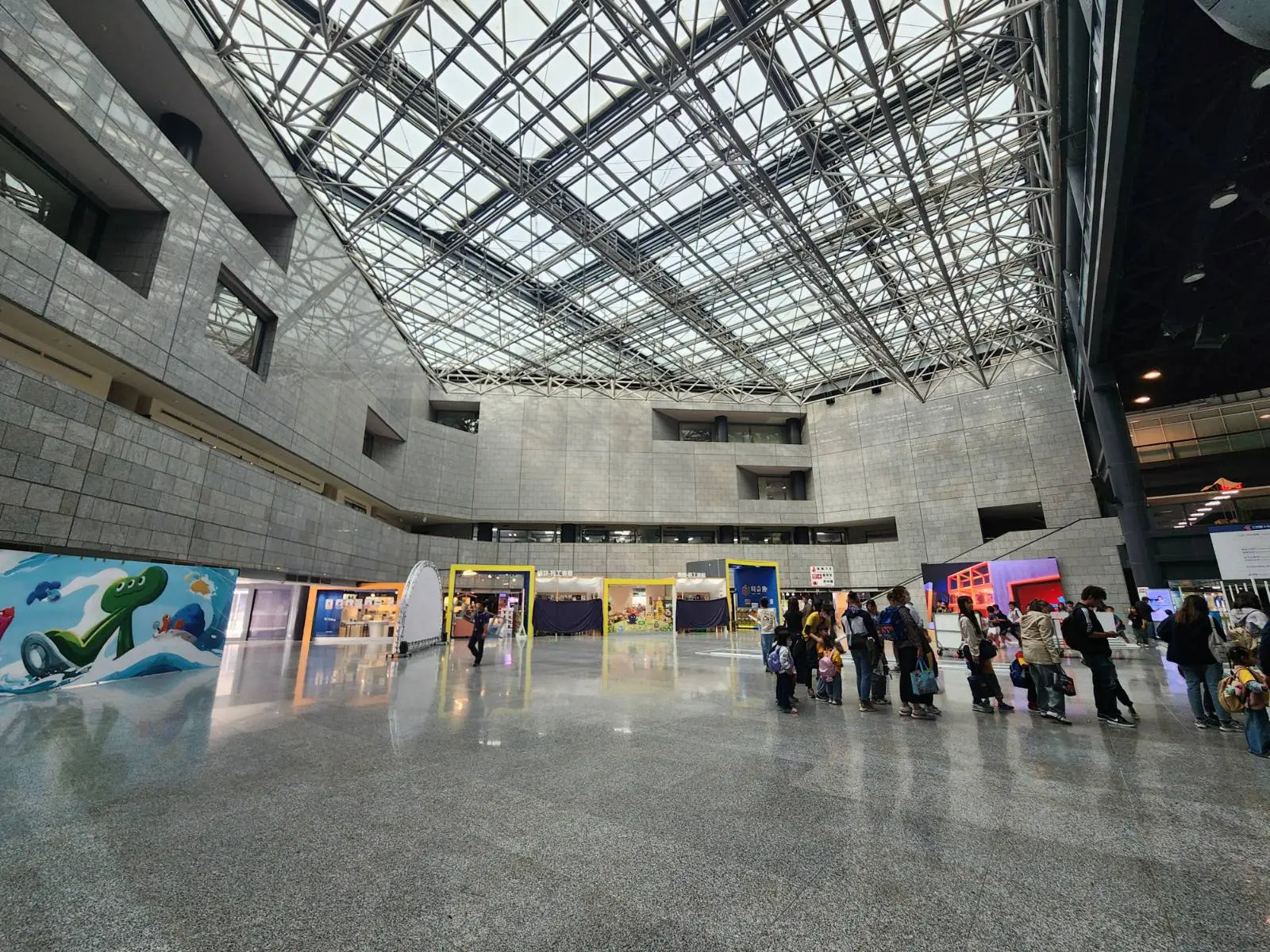
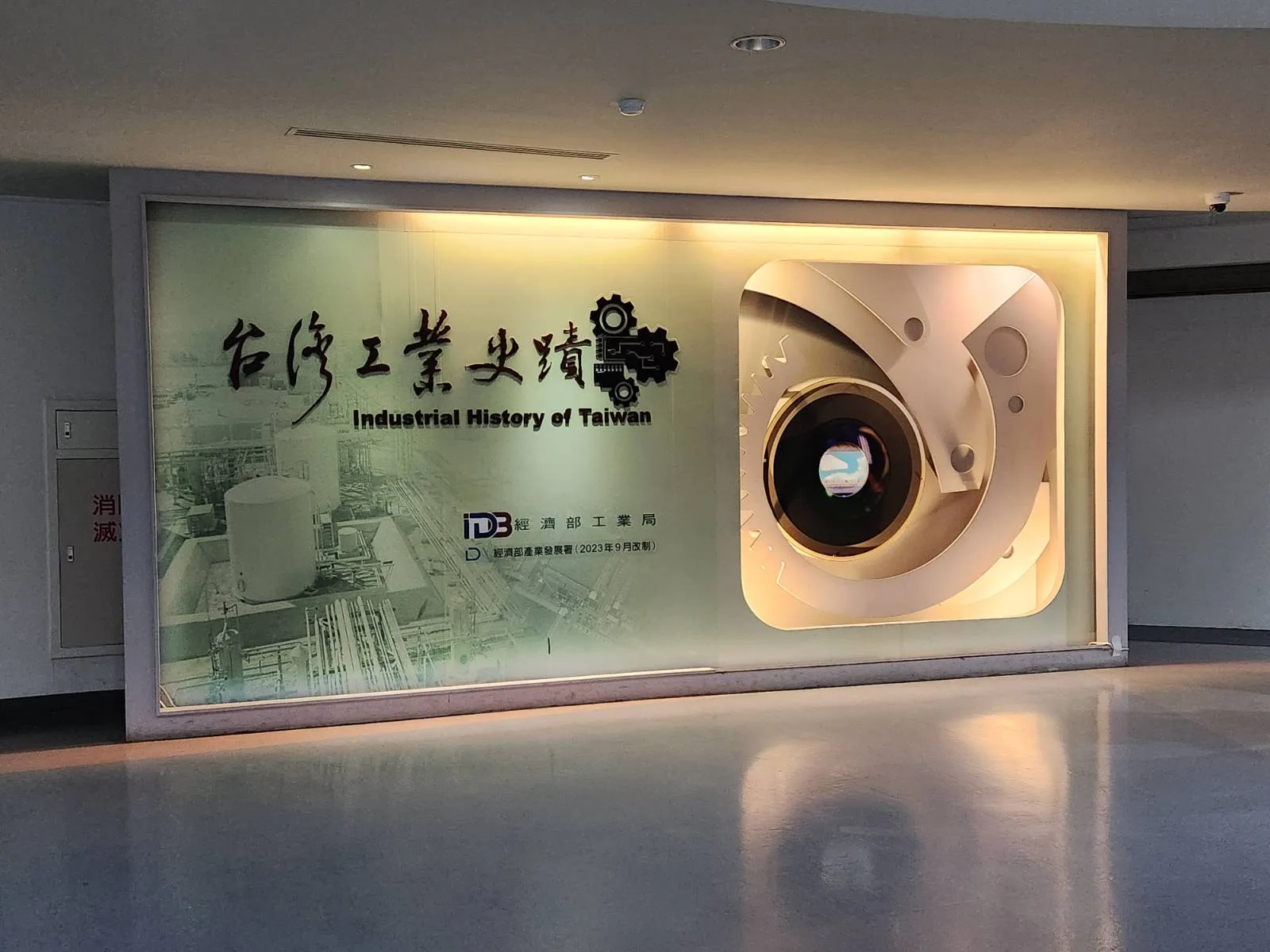
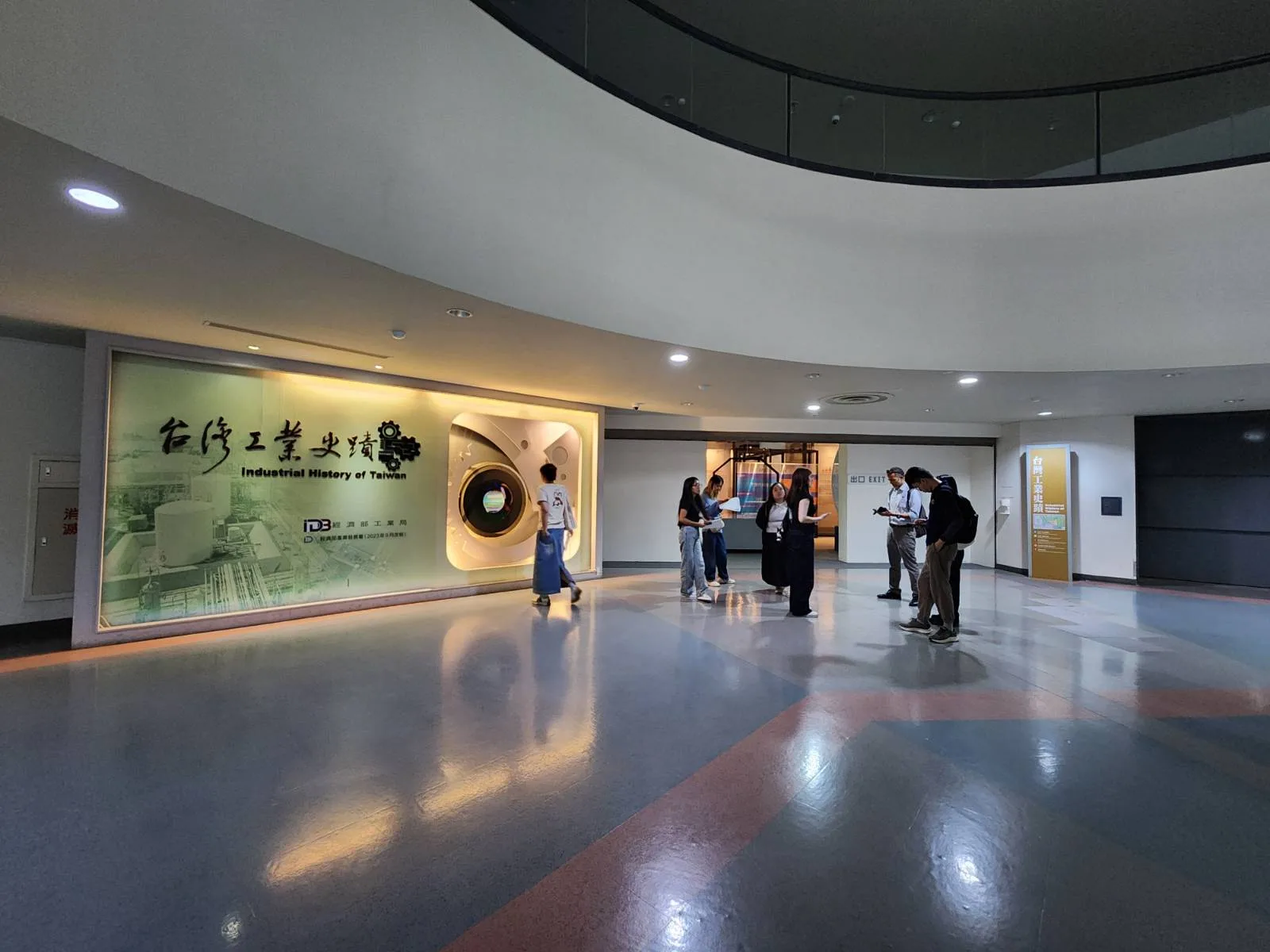
On Friday morning, November 20, from 9.10 a.m. to 11.50 a.m., our Global Development class visited the 6F permanent exhibition “Industrial History of Taiwan” (臺灣工業史蹟廳) at the National Science and Technology Museum (國立科學工藝博物館) in Kaohsiung (高雄科工館). The master’s course is taught by Prof. Vincent Rollet of the Department of International Affairs. I wanted to test one idea from class. Was Taiwan’s industrialization planned from the top down by the state, or was it less orderly, shaped by outside powers, foreign capital and private entrepreneurs?
Main Periods of Taiwan’s Industrial History
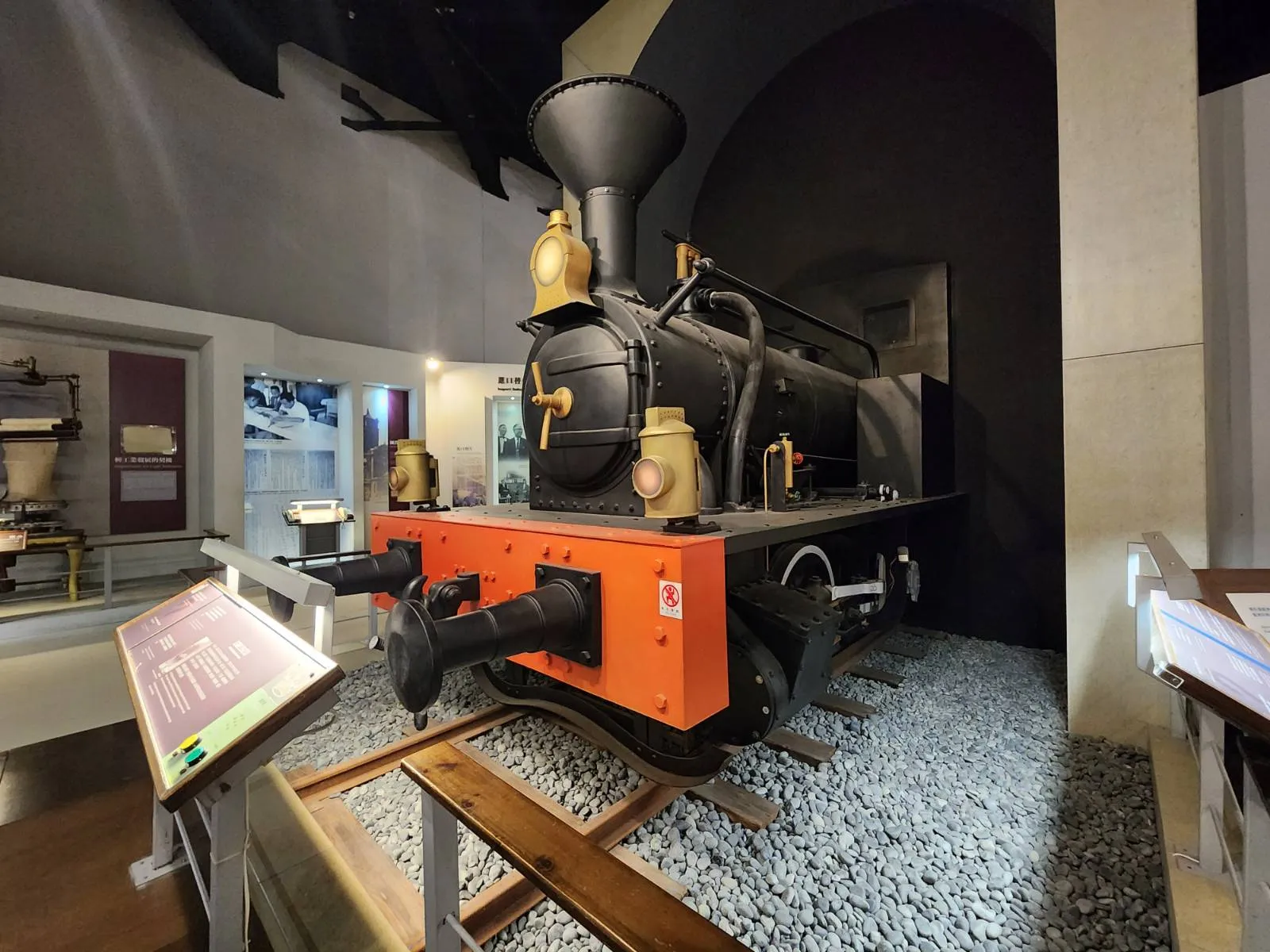
Taiwan’s industrial history starts with global trade. In the 17th century the Dutch East India Company (VOC) settled at Tainan in 1624. It traded deer skins, mostly to Japan, and spices for its own profit, so industry meant extraction for a distant market. In 1887 Liu Mingchuan (劉銘傳), Taiwan’s governor under the Qing, bought two steam locomotives from Germany’s Hohenzollern, and the Tung Yun Hao (騰雲號) was Taiwan’s first, a move driven by defense concerns more than by provincial status. Japanese rule (1895-1945) organized the colony around the empire’s needs, with sugar its best-known industry. In 1949 the Republic of China government retreated to Taiwan, bringing capital, equipment and entrepreneurs, especially from Shanghai. From 1950 to 1965, US Aid (美援) supplied money, commodities and advice, so industry grew with external support and under external conditions. Yin Chung-jung (尹仲容), who headed the committee that allocated aid to industry, steered it toward private firms, and Howard L. Parsons (白慎士), the last director of the US AID Mission to China, oversaw the end of aid in 1965. After aid ended, Taiwan moved to export-oriented manufacturing and then to higher technology.
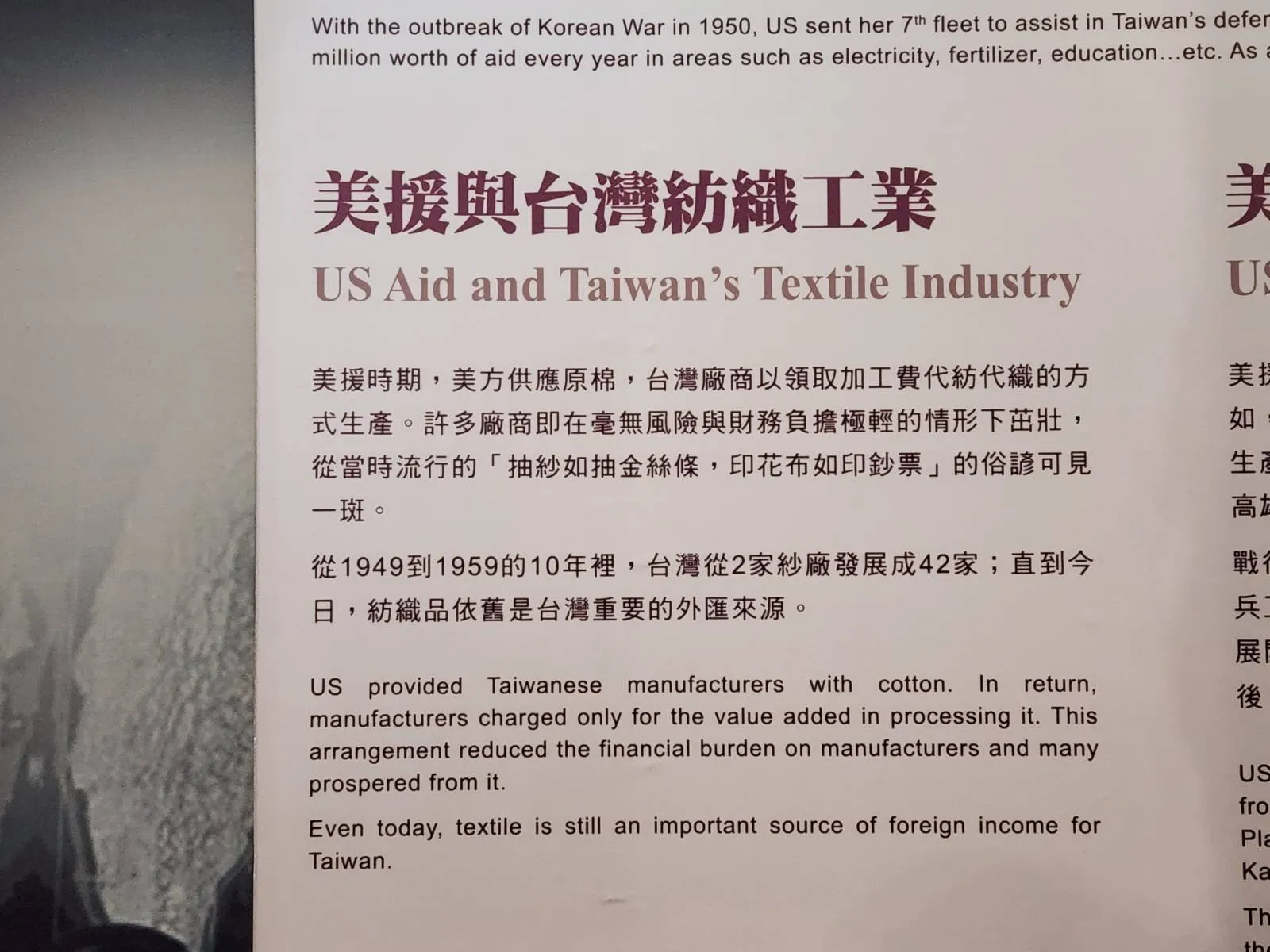
Textiles, from US Aid to Man-Made Fibers
The textile section showed most clearly how policy shapes an industry. Between 1949 and 1959, US Aid helped textile factories grow from 2 to 42, and three policies drove this. Import substitution (進口替代, 1953-1959) protected the domestic market so local producers could replace imported cloth. Under commissioned spinning and weaving (代紡代織), the government supplied aid-funded cotton to mills, which returned yarn or cloth for a fee, so mills got guaranteed work and the state controlled supply. The Statute for Encouragement of Investment (獎勵投資條例, 1960-1990), enacted as aid wound down, used tax reductions to attract foreign investment under the nineteen-point reform measures, which asked Taiwan to become self-sufficient, and a related law (華僑回國投資條例) targeted overseas Chinese capital.
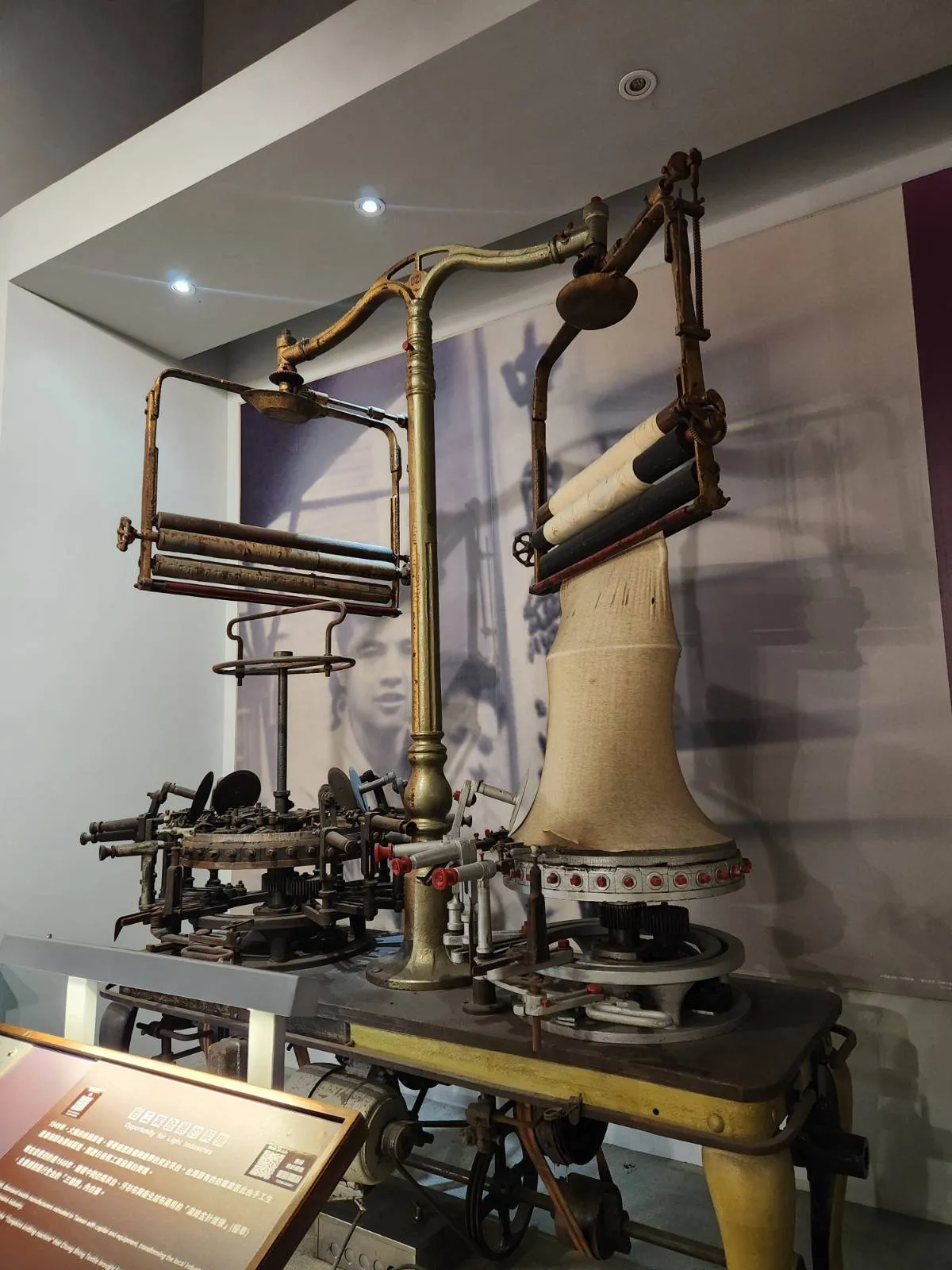
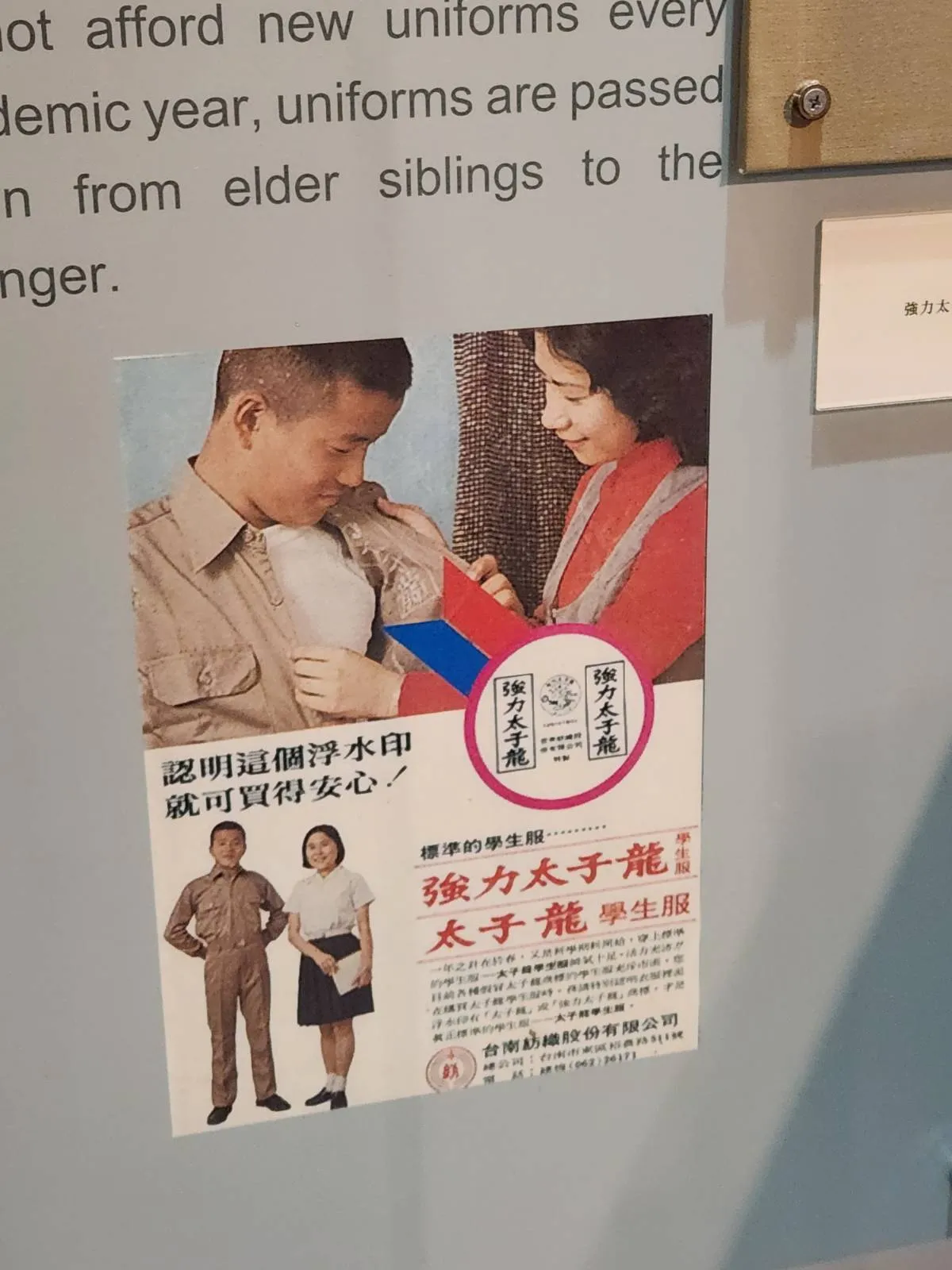
Many of the firms that grew on this base began in Shanghai. Hsu Yu-hsiang (徐有庠) founded Far Eastern Weaving there in 1945, followed the Nationalist government to Taiwan in 1949 and built Far Eastern Textile (遠東紡織) into the first Taiwanese company to cover spinning, weaving, dyeing and garments by 1965. The same retreat brought the Tompkins knitting machine, the “trolley machine,” which Chung Shing Textile (中興紡織) and skilled Shanghai craftsmen used to make Three Gun (三槍牌) underwear. Three Gun shared fame with Far Eastern’s 洋房牌 (Skyscraper) brand. A photo of the 1966 opening of a Skyscraper brand store in Taichung can be seen on the Taiwan Cultural Memory Bank. Policy set the conditions, but private entrepreneurs built these firms. When US Aid ended in 1965, Taiwan lost American cotton and turned to man-made fibers. That year Tainan Spinning (臺南紡織) produced the durable Tai Zi Long (太子龍) fabric, which was widely used to make students’ uniforms and pushed the industry up the value chain.
Semiconductors, from Packaging to Foundry
The museum’s industrial history site gives a clear timeline, from back-end packaging in the 1960s to System-on-Chip (SoC) innovation after 2000.
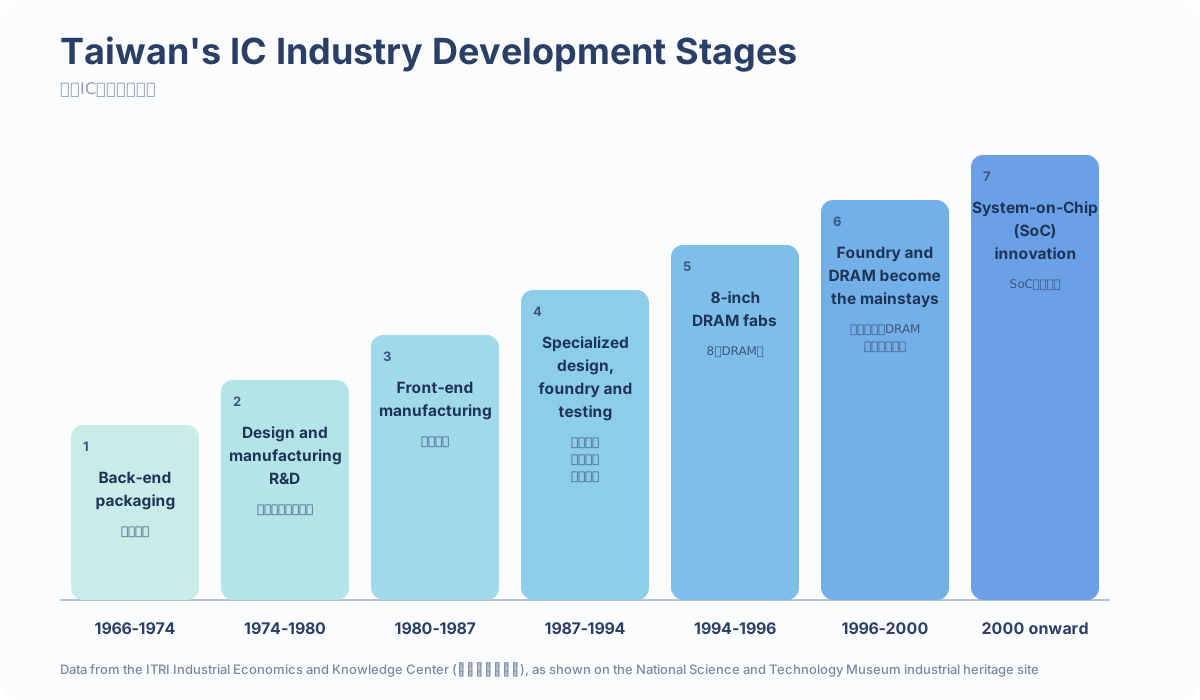
In the foreign-led stage (1960-1974), export policy drew American firms to do transistor production and low-skill packaging because labor was cheap, and local firms followed, since packaging needed little capital. In the state-led stage (1974-1979), the state responded to diplomatic shocks and the oil crisis by creating the Electronics Research and Service Organization (ERSO) inside the Industrial Technology Research Institute (ITRI, 工研院) in 1974. The government then brought in overseas Chinese advisers, who helped ITRI transfer technology from RCA (Radio Corporation of America) in 1976. Private firms were barely involved, so foreign packaging plants still dominated.
The state then cultivated local firms (1980-1989). The Hsinchu Science Park opened in 1980, and ERSO spun off UMC in 1981 and TSMC in 1987, the world’s first dedicated foundry, both with private capital. From 1990 onward, local firms took control, and by 1994, when ERSO spun off Vanguard International Semiconductor, private firms were complaining about unfair state competition, a sign they had grown strong.
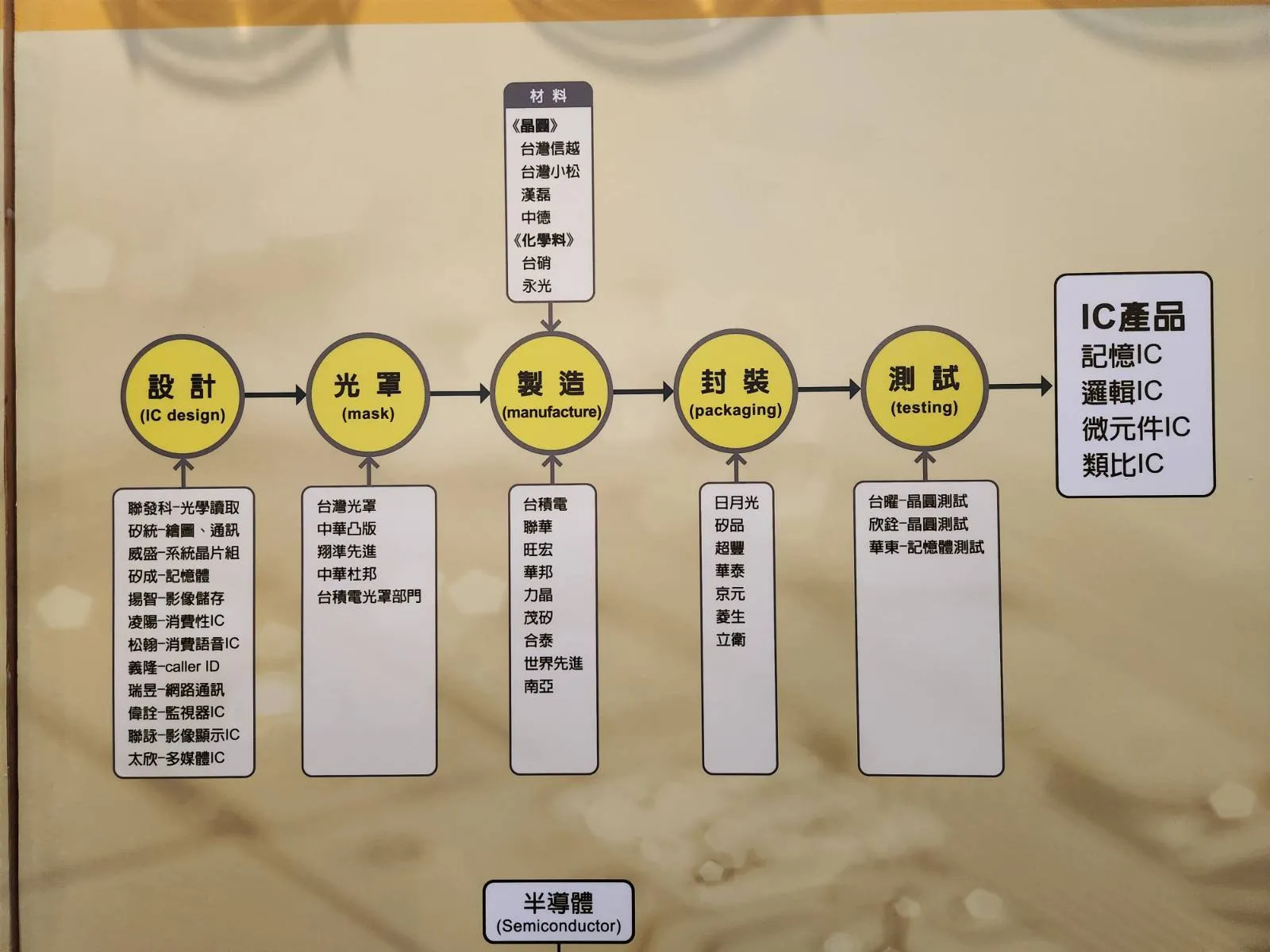
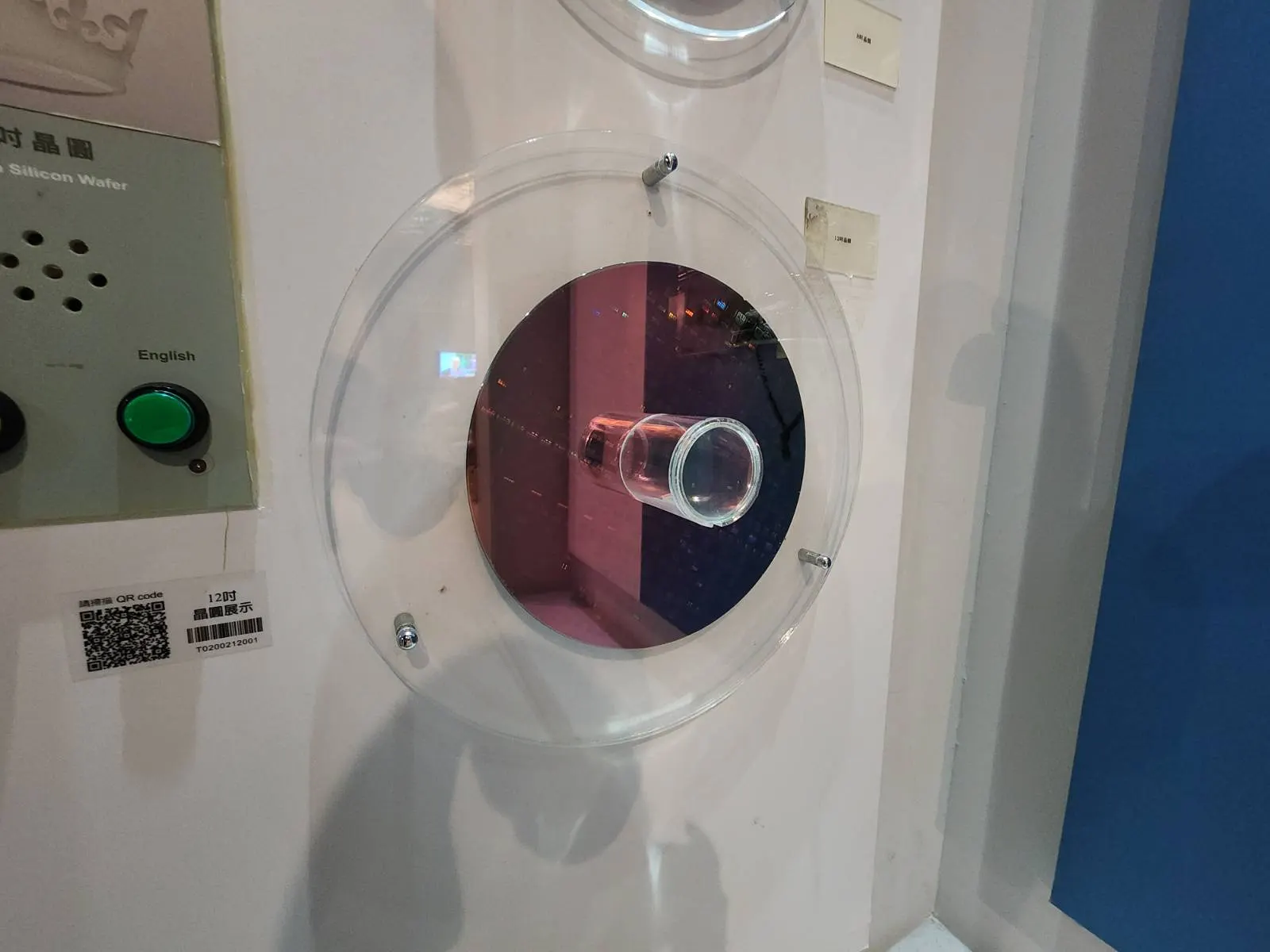
In short, the state supplied technology, institutions and the first firms, while private capital funded them, returning scholars joined them and foreign firms provided the early work and know-how.
Conclusion, Who Built It and What Comes Next
The pattern across the exhibition is a mix. The institutions included the Qing provincial government, US Aid, ITRI and the Hsinchu Science Park. The people included Liu Mingchuan, Yin Chung-jung, Hsu Yu-hsiang (徐有庠) and Howard L. Parsons. My answer to the top-down question is “partly.” The state set the frame, but outside powers shaped what was possible, and private entrepreneurs did much of the building.
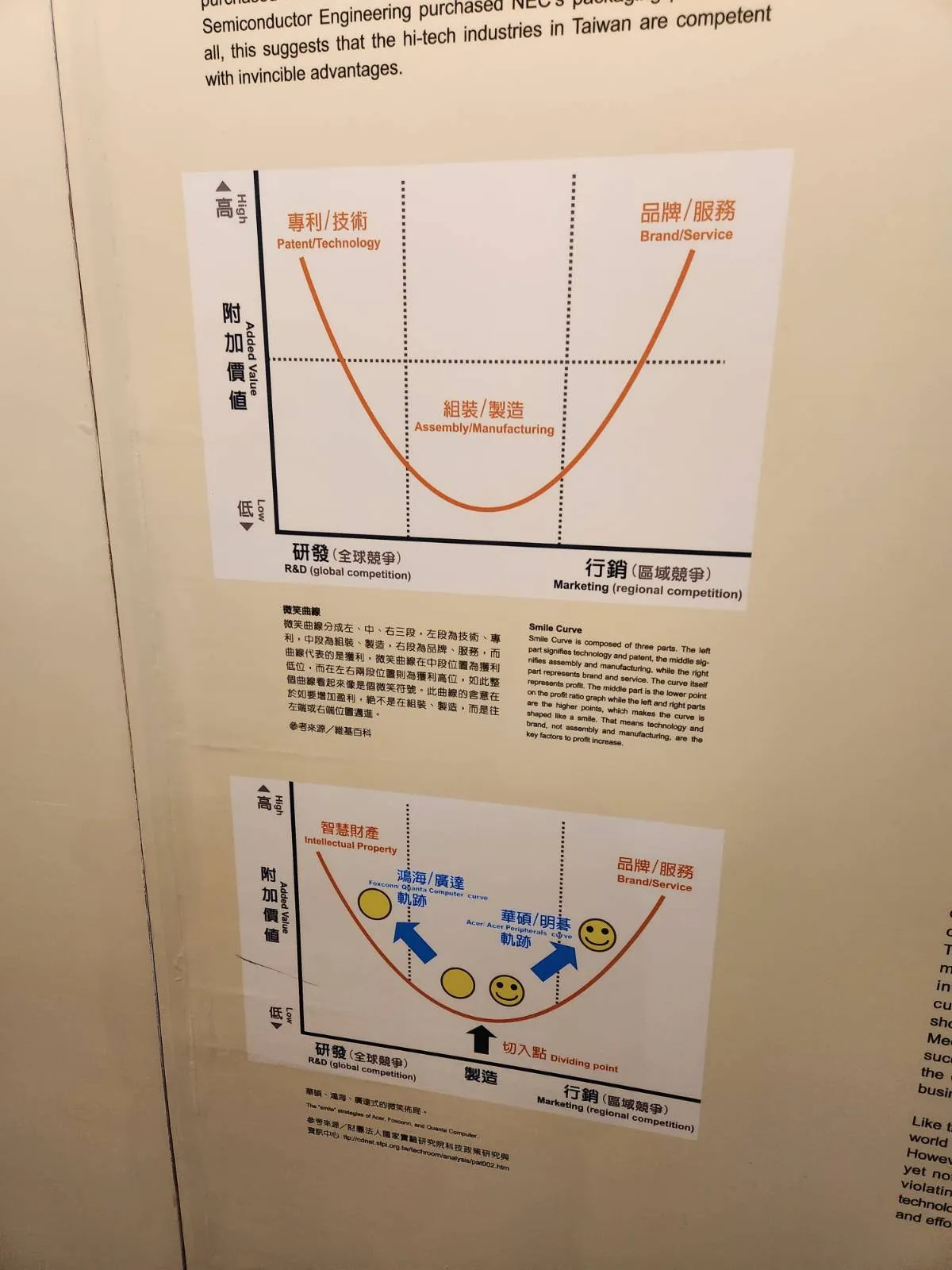
Looking ahead, Stan Shih, founder of Acer, proposed the “smiling curve,” in which value added is high in R&D, design, branding and service and low in the manufacturing and assembly stages in the middle. Semiconductor manufacturing is Taiwan’s great strength, and with AI rising, much of the profit goes to firms that design and make advanced chips. Two challenges stand out. The first is over-concentration. Semiconductors are the only industry making big money, while many others remain underdeveloped, underrepresented or underfunded. The second is geopolitics. The politics of the regimes around Taiwan have always shaped its industry and remain its largest risk. Whether Taiwan moves toward the high-value ends of the smiling curve will depend on the same mix of state, outside powers and entrepreneurs that built its industry.